Why do leaders centralise under pressure?
Maretha Smit · 14 July 2026
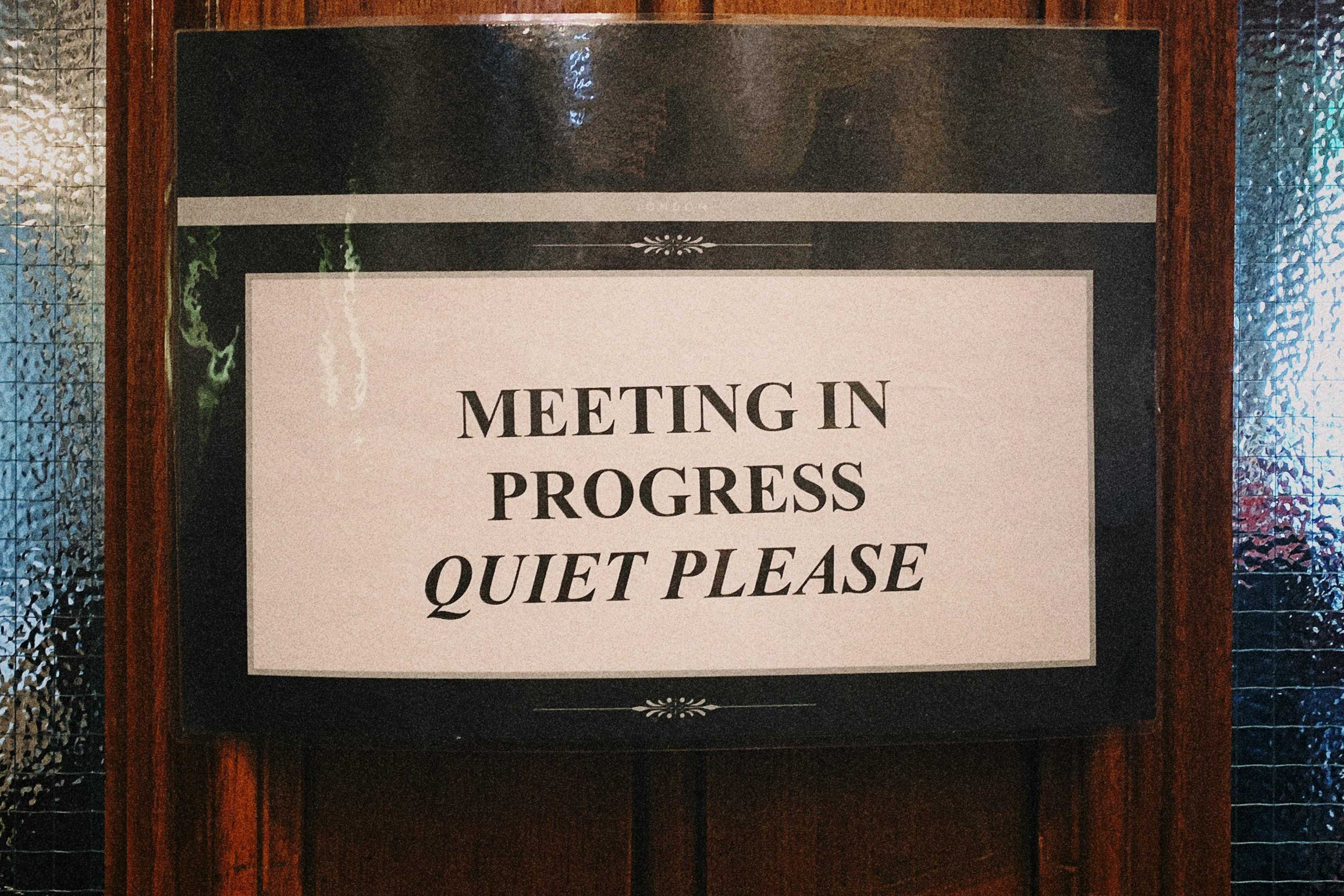
When disruption hits an organisation, leadership teams tend to respond in a remarkably consistent way. Decision-making gets centralised, information flow gets restricted, and a small group takes control of the response while the rest of the organisation waits for a carefully worded email. The pattern is so predictable that most people inside it can describe the next step before it happens.
The instinct behind this response is not irrational. Several forces push leaders toward centralisation at once.
Under stress, the brain’s threat response takes over and cognitive bandwidth contracts. The ability to hold complex, distributed information fades, making direct, top-down directives feel easier to process than collaborative sensemaking. Centralisation also provides immediate, visible motion — action that feels better than sitting with uncertainty, even when the activity is more about visibility than progress. When stakes are high, the fear of cascading failure makes leaders want to personally manage the riskiest variables rather than trusting distributed systems. Building consensus takes time that a crisis doesn’t seem to offer, so bypassing group input feels like the pragmatic choice. And as anxiety rises across the organisation, leaders tend to pull critical information upward, inadvertently starving everyone else of the context they need to make effective local decisions.
These are not character failures. Most are well-intentioned, and each one makes sense in isolation. The challenge is that they all push in the same direction: tighten the circle.
The instinct to centralise has been studied since 1981, when researchers Barry Staw, Lance Sandelands, and Jane Dutton described what they called threat rigidity, a reflex in which organisms contract under threat. It operates at individual, team, and organisational level simultaneously, with each level reinforcing the others. The reflex has been confirmed across industries, cultures, and decades, yet the pattern has not shifted in forty-five years — suggesting that the problem is not a lack of understanding but the nature of the reflex itself.
What makes this consequential is what gets dismantled when the reflex fires. Every organisation has a sensemaking layer: the people closest to the work, the customers, and the operational friction points who are the first to notice what is changing. Whether their observations travel anywhere depends on trust, and trust is built over time through the slow work of bringing more people into conversations and treating what they see as worth hearing. That trust infrastructure is exactly what contracts when leadership centralises the response.
The Boeing 737 MAX case illustrates this at catastrophic scale. Engineers and test pilots were detecting signals that something was wrong. The sensemaking was happening. What was missing was an architecture that could let those uncomfortable observations reach the room where decisions were being made. The cost was 346 lives.
The same mechanism operates in organisations navigating any kind of significant disruption. If forty-five years of research tells us that awareness alone won’t override the reflex, the response has to be architectural — designing the conditions that keep the sensemaking layer connected even when the instinct to centralise fires.
This is general information, not advice for your organisation.